
Why Smart Entrepreneurs Are Switching to AI Assistants
Discover how AI assistants help entrepreneurs save 12+ hours weekly.


What if you had five employees tomorrow — without hiring anyone?
You know the feeling. It's Friday afternoon, your inbox is overflowing, that quote still needs to go out, and you promised to be home on time tonight. As an entrepreneur, you wear twenty hats at once: salesperson, marketer, bookkeeper, customer service rep — and somewhere in between, you're trying to do the actual work you started your business for.
What if you woke up tomorrow with a team of five employees, without having to hire anyone?
That's the question that wouldn't let me go. As an entrepreneur who spent 25 years in the IT industry, I watched large companies get smarter and smarter with AI. But the freelancer and the small business owner? They fell behind. Not because the technology wasn't there, but because nobody made it accessible. That's exactly why I'm building what I'm building.
The quiet revolution in small business
Something is shifting. According to recent research, AI adoption among businesses has jumped from 14% to 23% in just one year. But here's where it gets interesting: among entrepreneurs who actively use AI, one in five saves an average of 12 hours per week. That's a day and a half. Every single week.
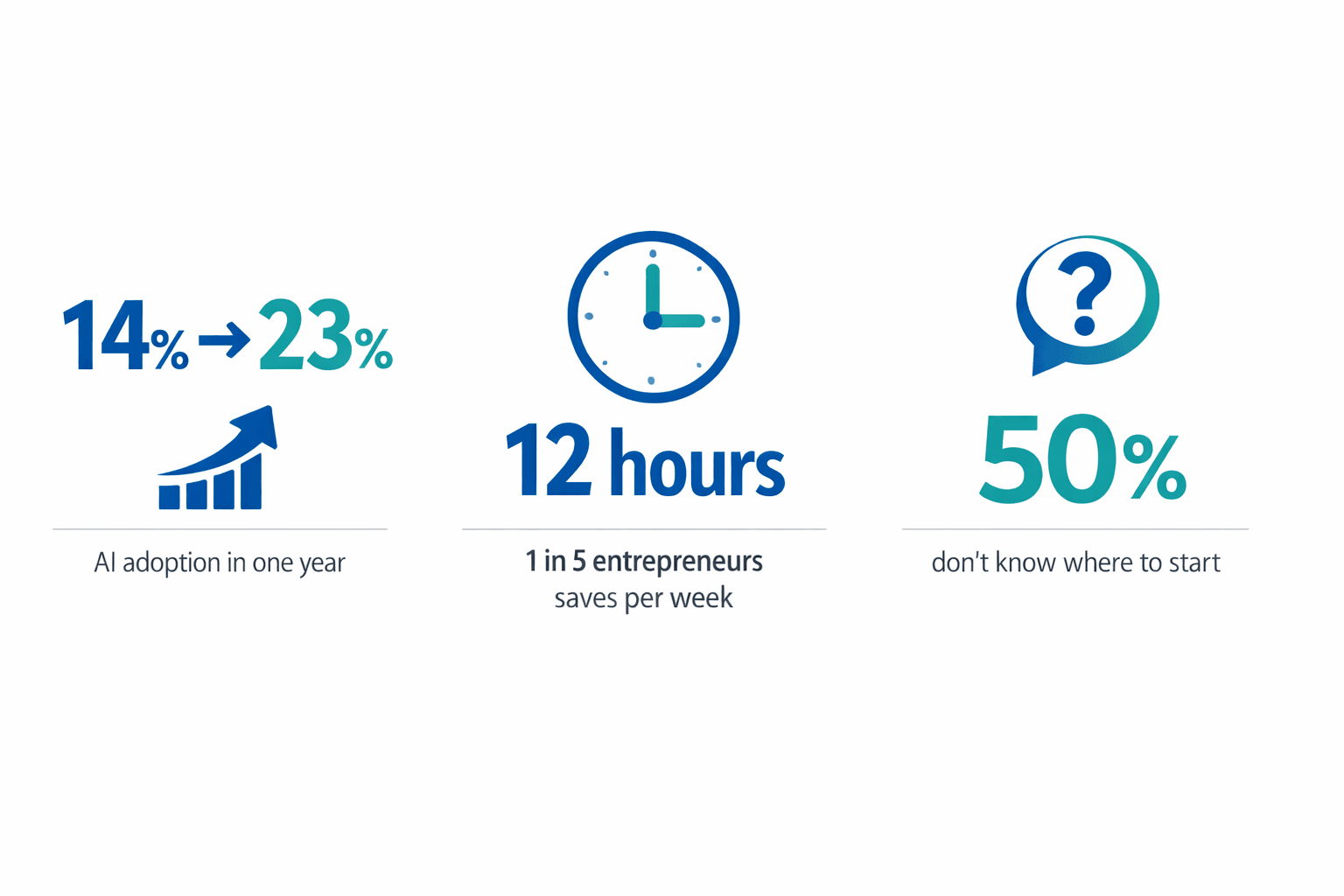
Yet half of all business owners remain on the sidelines. Not because they don't see the benefits, but because they don't know where to start. "AI seems like something for big companies with IT departments," I hear often. "I don't have time to figure out yet another tool."
Sound familiar? Then this article is for you.
What is an AI assistant, really?
Forget the sci-fi images of robots taking over your job. An AI assistant is simply software that understands what you're asking and gets to work on it independently. Not unlike a good employee — except one who's never sick, doesn't need breaks, and is just as sharp at 3 AM as at 9 in the morning.
The difference from tools you might already know? An AI assistant thinks along with you. You don't need to know exactly which button to press. You just say what you need.
"Write a newsletter about our winter collection, in the same style as last month."
"Answer this customer question and check what the delivery time is."
"Create a social media plan for the next two weeks."
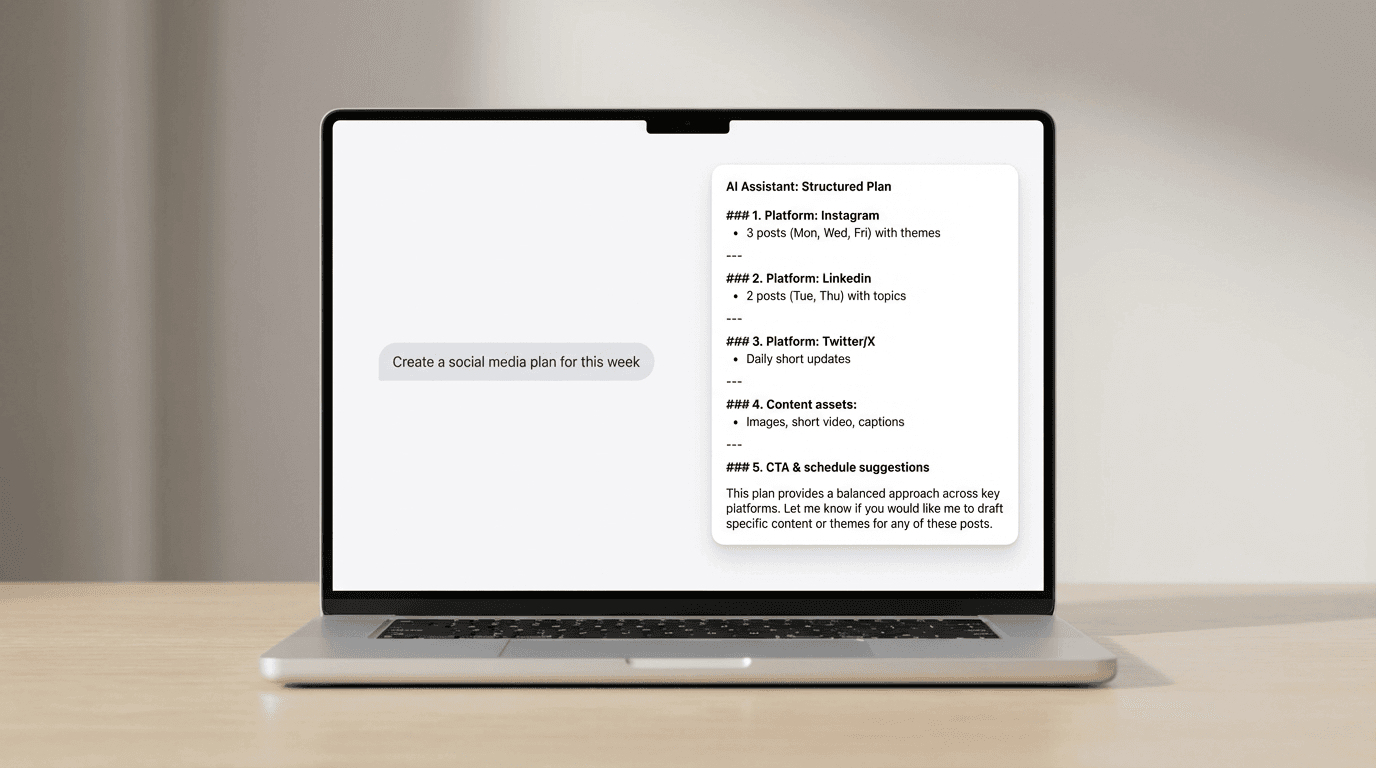
The AI understands the context, knows your business, and delivers results. No complicated interfaces, no hours of training. Just a conversation.
The three tasks entrepreneurs delegate to AI first
From conversations with hundreds of business owners, almost everyone starts with the same tasks. Not coincidentally, these are also the tasks that eat the most time while contributing least to growth.
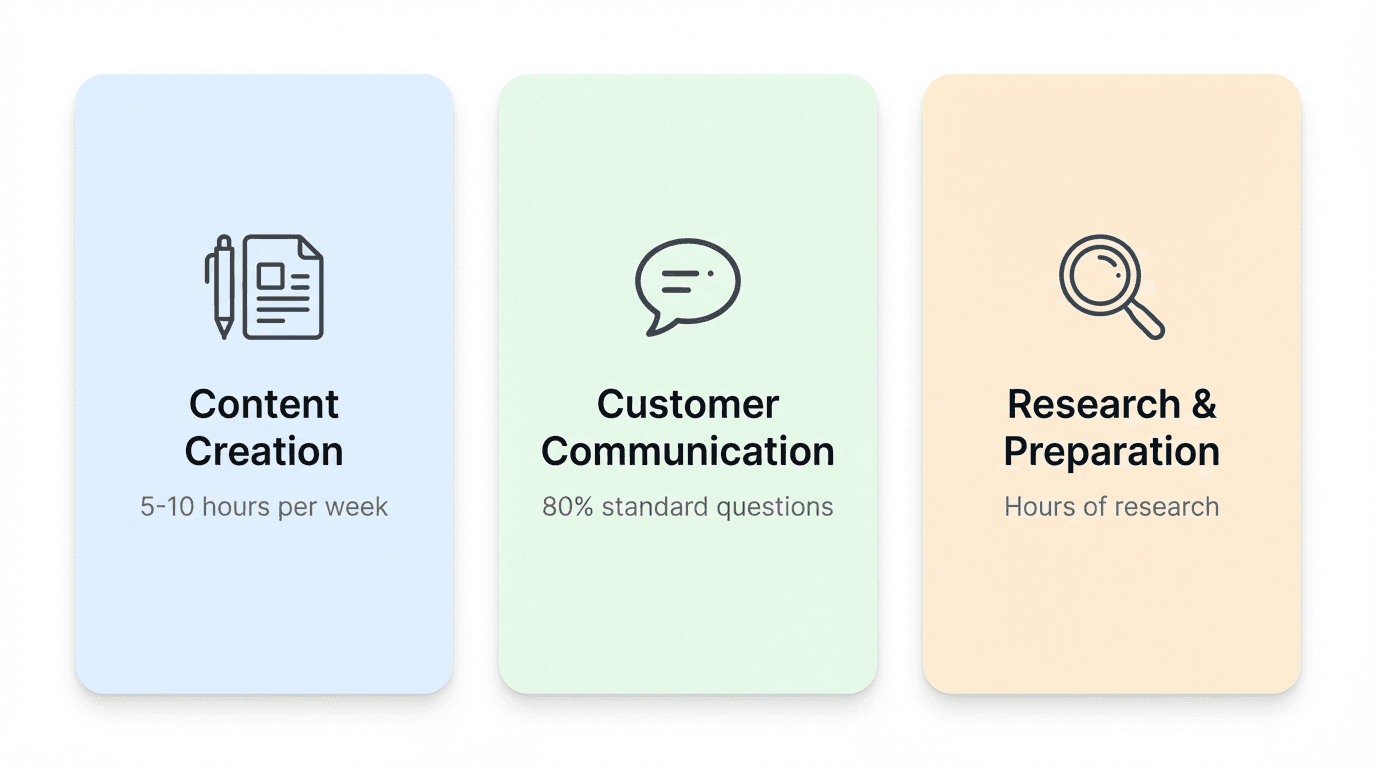
1. Content creation
Blogs, social media posts, newsletters, product descriptions. The average entrepreneur spends 5 to 10 hours per week on content. With an AI assistant that knows your tone of voice and understands what your audience wants to hear, this becomes a matter of minutes per piece.
And no, it won't be boring, generic text. A well-configured AI assistant writes in your voice, with knowledge of your products, your customers, and your market.
2. Customer communication
Answering the same questions every day. "What are your opening hours?" "Can I still change my order?" "Do you have this in blue?"
An AI assistant handles 80% of these questions independently, in your communication style. The remaining 20% gets presented to you with a draft response. Your customers get faster replies, you keep time for the conversations that really matter.
3. Research and preparation
For a quote, you first need to understand the client. For a blog, you need to know what's happening in your market. For a presentation, you need to have the numbers ready.
This prep work takes hours and is exactly where AI excels. "Find the latest three posts about this company." "What are the opening hours and prices of our main competitor?" "Give me five trends in our industry this year." The AI does the research, you make the decisions.
"But isn't it impersonal?"
This is by far the most common question. And rightfully so — as an entrepreneur, your business is personal. You built it with blood, sweat, and tears. The idea of a computer communicating on your behalf feels uncomfortable.

But there's an important misconception here. An AI assistant doesn't replace you — it amplifies you. Compare it to a junior employee you just hired. You teach them your way of working, explain how you deal with customers, what tone you use. After a while, they can handle more independently, but you remain in charge.
With AI, it works exactly the same way. You "train" the assistant with examples of how you communicate. You give feedback when something's off. And for important matters, you review before it goes out. The difference: AI learns in minutes what a human learns in months. And what the AI learns once, it never forgets.
What does it cost?
Let's be honest about the investment. Most AI assistant platforms work with monthly subscriptions, ranging from €25 to €175 per month depending on what you need.
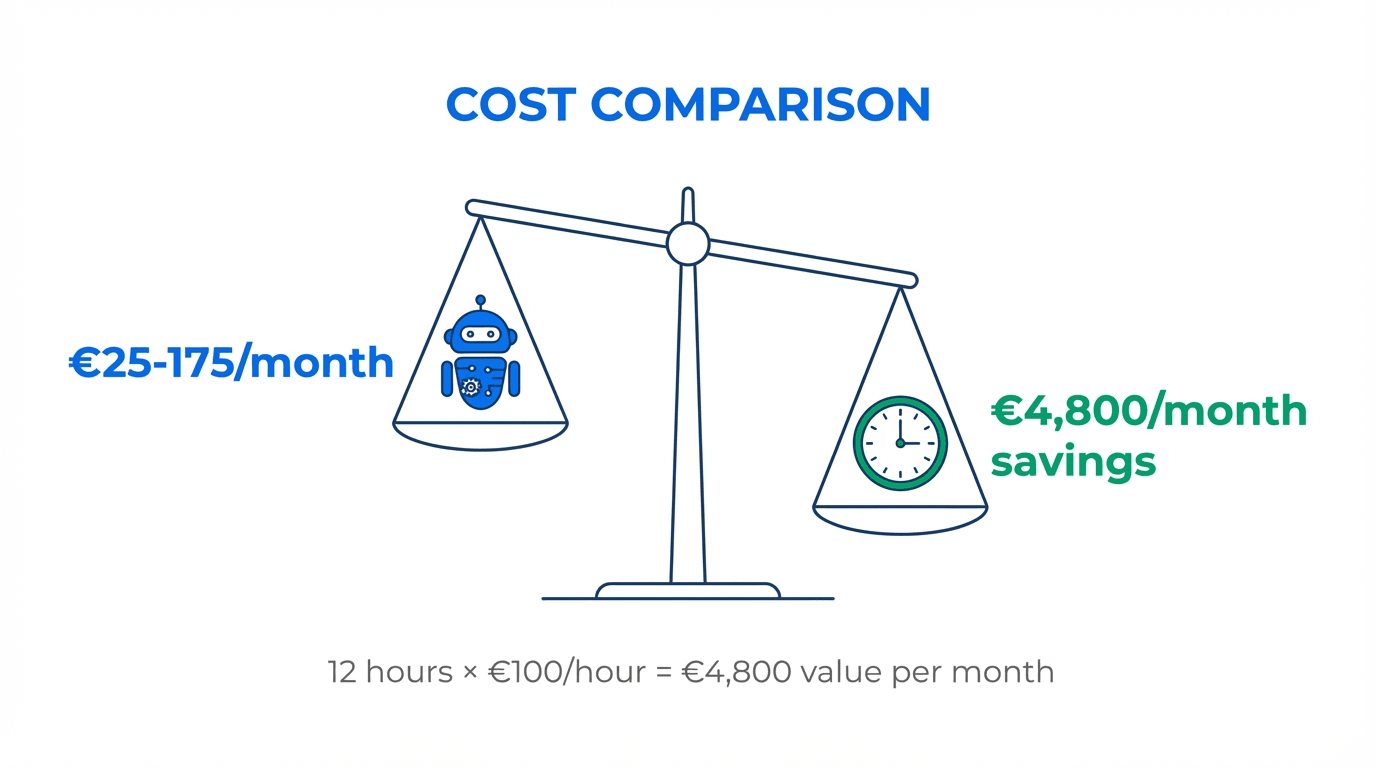
Compare that to the cost of a freelancer for the same tasks, or worse: the value of your own hours that you're currently spending on repetitive work. If you give yourself an hourly rate of €100 (and that's modest for many entrepreneurs), an AI assistant pays for itself within the first week.
The real question isn't "can I afford this?" but "can I afford not to do this while my competitors are?"
How do you start?
The beauty of AI assistants is that you can start small. You don't have to overhaul your entire business. Start with one frustration, one task that costs you time every week and that you really shouldn't have to do yourself.
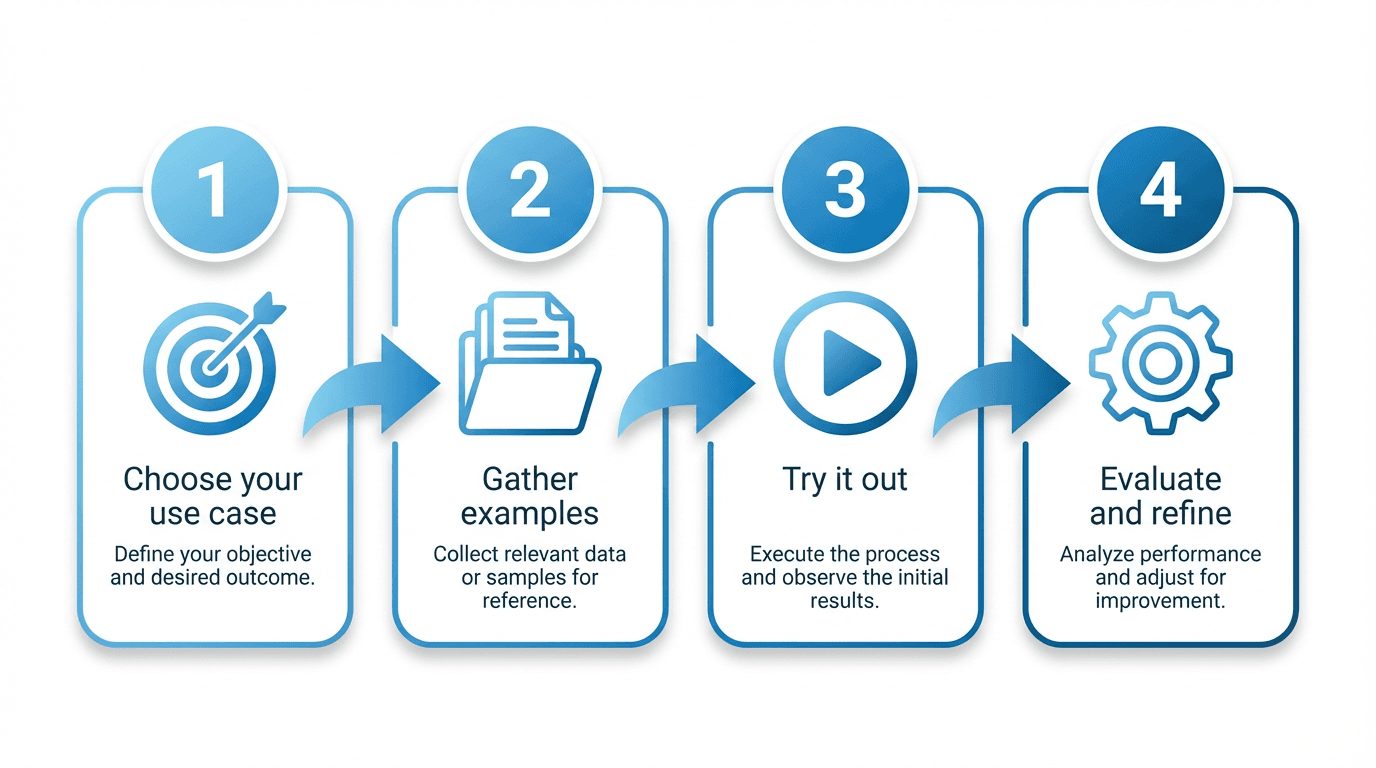
Step 1: Choose your first use case. For most entrepreneurs, that's content (social media, blogs) or customer communication (email, chat).
Step 2: Gather examples. How do you write? What questions do you get often? What are good answers? This becomes your AI assistant's knowledge base.
Step 3: Try it out. Choose a platform that fits your needs and test it with a concrete task from your own work week.
Step 4: Evaluate and refine. Just like with a new employee: the first results aren't perfect. But with feedback, it gets better fast.
The future has already begun
Five years from now, we'll look back at 2025 as the year AI went mainstream for small business. The entrepreneurs who get in now are building a lead that's hard to catch up to. Not because the technology won't be available later, but because they'll have years of experience using it effectively.
You don't need to be technical. You don't need a big budget. You just need to decide that your time is too valuable to spend on tasks that an AI can do better and faster.
The question isn't whether AI will play a role in your business. The only question is: will you be the one who decides what that role is?
This is exactly why I'm building the LaunchMinds products. Not because AI is a hype, but because every day I see how much time entrepreneurs lose on work they shouldn't have to do themselves. In the coming weeks I'll share here how I'm tackling that — and what you can already do with it today.
Want to brainstorm about how AI could work in your situation? Get in touch via the contact form or find me on LinkedIn.